How to store trading cards long-term without damage
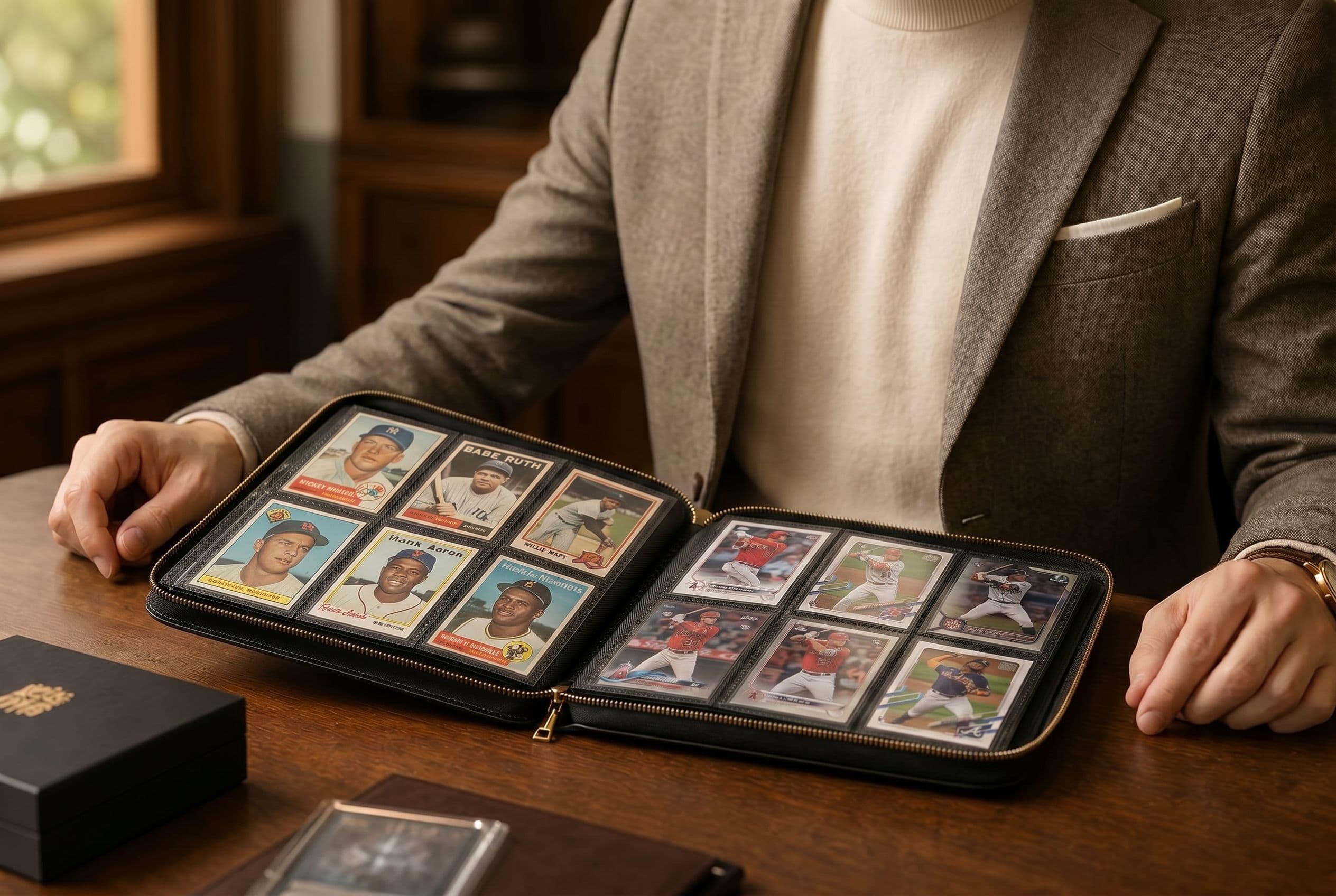
A trading card is a small, fragile thing — paper, ink, and a coat of gloss only microns thick. Left to the open air it fades, curls, and softens, slowly enough that you rarely notice until the damage is already done and irreversible. Good long-term storage is not complicated. It is simply the discipline of removing the four things that age a card: moisture, heat, light, and handling.
Get the climate right
The single biggest threat to a paper collection is humidity. Too much, and cards draw moisture from the air, warp, cockle, and grow the microscopic mould that clouds a surface for good. Too little, and they turn brittle and chip at the corners.
The targets conservators use are well established — the same range the Library of Congress and major museums hold for archival paper:
- Relative humidity of 45–55%. Above 60% you invite warping, foil curl, and mould; below about 30%, brittleness.
- Temperature of 18–24°C (65–75°F). Past roughly 27°C (80°F), inks degrade faster and the adhesives behind foil begin to break down.
- Stability above all. A steady "slightly wrong" climate is kinder than one that swings between extremes — every expansion and contraction stresses the card.
A small hygrometer is worth more than any amount of guesswork; it tells you what the air is actually doing. In a damp room, a sealed enclosure with a silica-gel buffer holds a far steadier climate than an open shelf ever can.
Keep it dark
Ultraviolet light breaks pigment down at the molecular level, and the loss is permanent — no restoration brings the colour back. A card left in sunlight can visibly fade within a single year. Keep cards in the dark, and if you display them, do it behind UV-filtering glass and well out of direct sun. Even indirect daylight, given enough time, will lift the colour from a card.
Choose inert materials
This is where most collections are quietly ruined. Cheap pages and sleeves made from PVC contain plasticisers that slowly migrate out of the plastic, fogging and etching the card beneath — the infamous "PVC damage." It is gradual, invisible at first, and impossible to undo.
The remedy is simple: store cards only in polypropylene, the inert plastic conservators trust. It carries no plasticisers and will not off-gas onto the card.
- Look for pages and sleeves marked PVC-free and archival-safe, or described as inert or stable.
- Remember that "acid-free" is really a paper term — for plastics, what you want is PVC-free polypropylene (PP), or the equally stable PET.
- Be wary of soft, oily-feeling plastic pages; that softness is the plasticiser you don't want anywhere near a card.
The cheapest part of a collection should never be the thing holding it.
Handle less, and handle clean
Every touch leaves oil and salt from the skin, which over time etches the surface and dulls the gloss. Hold cards by the edges with clean, dry hands — cotton gloves for anything valuable — and once a card is sleeved and paged, resist the urge to take it out again. The less a card is handled, the longer it keeps both its finish and its grade.
Where you keep it matters
Avoid the three worst rooms in any home: the attic (heat), the garage (swings and damp), and the basement (humidity). Keep cards off exterior walls, which run cold and quietly condense moisture, and away from radiators, vents, and windows.
Do these things — steady climate, darkness, inert materials, careful handling, a sensible spot — and a collection will comfortably outlast the collector. That is the whole idea behind a binder built not for a season, but to be kept.