How to store a card collection in a binder — without damaging it
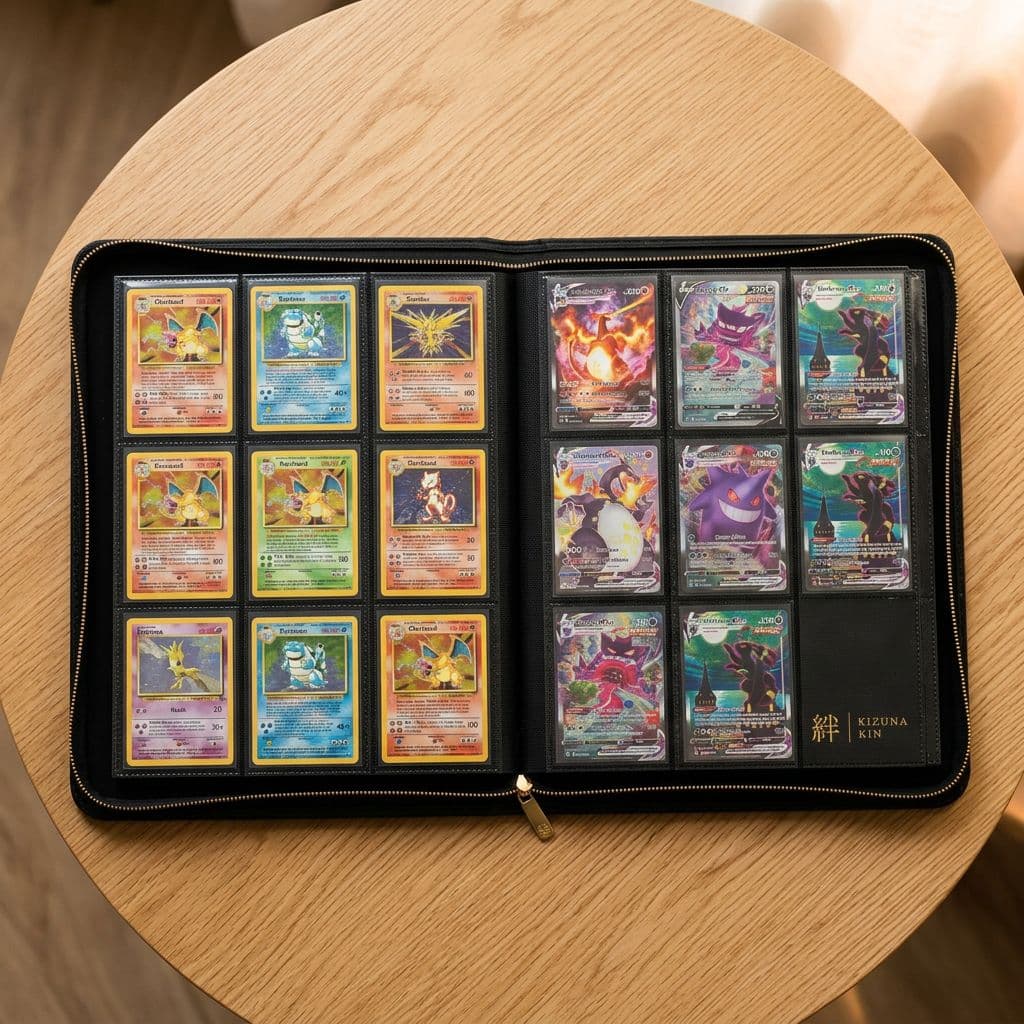
A serious collection deserves to be seen, not buried in a box. That is the case for the binder: it keeps a collection organised, protected, and in front of you — something to turn through rather than something stored away and forgotten. Done well, a binder is one of the safest homes a card can have. Done badly, it is one of the most damaging. The difference is entirely in the binder you choose and how you use it.
Do binders damage cards?
Not on their own — but the wrong binder absolutely can. The usual culprit is the ring. Round-ring binders let pages swing and shift, and the rings can press crescent-shaped dents into the cards nearest the spine. D-rings are better, but the real answer is to avoid rings altogether.
The safest design is a ringless, zippered binder with sewn-in pages:
- No rings means nothing to indent or catch a card.
- A full zip seals the collection against dust, spills, and damp.
- Sewn-in pages don't slip, sag, or fall out, and the binder lies flat without straining the cards.
This is the standard a collection actually deserves — and the standard a Kizuna binder is built to.
Choose the right pages
The binder protects the outside; the pages protect the card. Two things matter most:
- Archival, PVC-free material. Cheap pages made from PVC leach plasticisers that fog and etch a card over time. Always use pages described as acid-free, PVC-free, archival-safe — inert polypropylene is the standard.
- Side-loading pockets. Side-loading pages take the card in from the side rather than the top, so gravity can't slide a card out and dust can't fall in. Top-loading pages are the most common way a card quietly works its way loose.
Always sleeve a card before it goes into a page, especially anything valuable — a sleeve keeps the surface off the pocket and adds a second layer against moisture and oils.
One card per pocket, never more
It is tempting to double up, but never force two cards into one pocket. It bends and scratches both, stretches the pocket so it no longer holds anything snugly, and makes them difficult to remove without damage. One card per pocket, and don't overstuff a page — a pocket that has been stretched never grips properly again.
A binder should hold a collection the way it deserves to be held: snug, square, and still.
Organise it so you'll use it
A collection you can navigate is a collection you'll enjoy. There's no single right system — pick what suits you and stay consistent:
- By set or series, kept in order — the most popular approach, and the easiest to complete.
- By value, with the best cards given pride of place up front.
- By type, colour, or theme, if you collect to display rather than to complete.
For anything sizeable, keep a simple master list — a spreadsheet or a collecting app — noting which binder and page each card lives on. Label the binders; future-you will be grateful.
Keep it in good conditions
A binder is not an excuse to ignore the climate. Cards in any storage can warp if the air is too humid or the temperature swings, so keep binders somewhere cool, dry, and stable — upright on a shelf or laid flat, never wedged at an angle that lets the cards move. Out of direct sun, away from radiators and exterior walls.
Get those things right — a ringless zippered binder, archival side-loading pages, one card per pocket, sensible organisation, a steady climate — and a binder becomes exactly what a collection needs: protection you can actually open and enjoy, built to be kept and passed on.